Waste clearance solutions around Rushey Green Catford
Posted on 02/07/2026

Waste clearance solutions around Rushey Green Catford: practical, local, and stress-free options
If you live or work near Rushey Green, you already know waste has a habit of building up at the least convenient time. One week it is a flat packed with moving boxes, the next it is a garden cut-back, broken furniture, or builders' debris that seems to multiply overnight. Waste clearance solutions around Rushey Green Catford are about more than simply "getting rid of stuff"; they are about choosing a safe, efficient, and sensible way to clear space without creating more hassle than necessary.
This guide explains how local waste clearance works, who it suits, what to look for, and how to avoid the common mistakes that cost time or money. If you want a tidy home, a workable business space, or just a smoother way to handle bulky rubbish, you are in the right place. Let's keep it practical.
Why Waste clearance solutions around Rushey Green Catford Matters
Rushey Green sits in a part of Catford where daily life is busy, homes are varied, and space is often at a premium. That mix matters. In terraces, maisonettes, flats above shops, and compact gardens, waste can become a real nuisance very quickly. Bags left out too long, damaged items in hallways, or old materials stacking up after a DIY job can make a property feel cluttered and, frankly, harder to live in.
Waste clearance solutions around Rushey Green Catford matter because they solve a local problem in a local context. Narrow access, limited parking, and shared entrances all change the way clearance should be handled. What works in a big suburban driveway may be awkward here. You need a plan that respects neighbours, keeps walkways clear, and removes waste without a drawn-out disruption.
There is also the simple emotional side. When a room is full of unwanted items, it can start to weigh on you. People often put off decluttering because the job feels huge. Then it gets bigger. A calm, organised clearance makes a visible difference very quickly. The room breathes again. You breathe a bit easier too.
For people comparing local options, it helps to think beyond "rubbish removal" as a generic phrase. A proper solution may involve household clearance, office clear-outs, bulky furniture disposal, garden waste collection, or even one-off builders' waste support. The best fit depends on the type of waste, how much there is, and how fast you want it gone.
If you are still exploring the broader service picture, the services overview is a useful starting point because it shows how different clearance needs can be matched to the right approach.
How Waste clearance solutions around Rushey Green Catford Works
In practice, waste clearance is usually a simple sequence: assess, quote, remove, sort, and dispose responsibly. The details matter, though, because a good clearance avoids guesswork. You do not want someone turning up with the wrong-sized vehicle or discovering halfway through that the job includes items they were not prepared to handle.
Here is the typical flow.
- Identify the waste - Is it general rubbish, furniture, garden cuttings, office contents, or construction debris?
- Estimate the volume - A few bags is very different from a full garage or loft.
- Check access - Are there stairs, tight entrances, controlled parking, or shared pathways?
- Choose the method - Man-and-van clearance, full clearance team, skip hire, or a mix of services.
- Clear safely - Items are removed with care to avoid damage to walls, floors, and communal areas.
- Sort for reuse or recycling - Reusable items may be separated, recyclable materials may be diverted where possible.
- Dispose correctly - Waste is taken to appropriate facilities in line with normal UK waste handling expectations.
What you will notice is that not every clearance needs the same solution. That's the key. A loft full of household clutter is not the same as a builder's pile from a renovation. A business looking to clear old desks and chairs has different priorities again, especially if the job must happen outside trading hours.
For bigger property clean-outs, a dedicated house clearance service can be more efficient than trying to handle everything in stages yourself. Likewise, for renovation debris, builders' waste clearance is usually the safer, cleaner route.
And if the waste is mixed with large household items, it is often worth looking at furniture disposal in Catford so bulky pieces are removed without you wrestling a sofa down the stairs. Not fun. Been there, no thanks.
Key Benefits and Practical Advantages
The strongest advantage of a good local clearance solution is control. You decide what goes, what stays, and how quickly the space is restored. That sounds obvious, but it is surprisingly valuable when you are dealing with a stressful move, a bereavement, an office transition, or a backlog of accumulated clutter.
Practical benefits include:
- Speed - Waste can be removed in a single visit rather than spread over days.
- Less lifting - You avoid injury risks and awkward carrying in narrow hallways or up and down stairs.
- Cleaner finish - Areas are left more presentable than if items were simply dumped into a skip or piled outside.
- Better sorting - Usable items and recyclable materials can be separated more thoughtfully.
- Reduced neighbour disruption - Especially useful around busy streets and shared buildings.
- More flexible handling - Ideal when waste is mixed and not suited to a single-bin approach.
There is also a planning advantage. Once the clutter is gone, people tend to make better decisions about the space itself. A loft may become storage again. A spare room may finally work as an office. A shop back room stops being an obstacle course. Small change, big effect.
For businesses, a tidy space can improve first impressions and day-to-day efficiency. If you are dealing with old filing cabinets, desks, packaging, or obsolete stock, an office clearance in Catford can remove the admin burden as well as the physical mess.
For households, the difference is often more personal. Clearing a garage or loft can turn a "someday" space into something useful again. You can actually use the place. Imagine that.
Who This Is For and When It Makes Sense
Waste clearance around Rushey Green Catford is not only for major clear-outs. In truth, it helps a wide range of people in very ordinary situations. The trick is recognising when a simple tip run or DIY effort is no longer the easiest route.
This is especially useful if you are:
- moving home and need to remove items you do not want to take with you
- preparing a rental property for new tenants
- clearing a property after years of accumulation
- managing an office move or shop refit
- tidying a garage, loft, shed, or garden
- handling post-renovation debris
- disposing of bulky furniture that is difficult to move safely
- supporting an elderly relative with a downsizing project
That last one comes up more often than people expect. Families often start with a simple plan and then realise the task is more emotionally layered than they thought. Old photographs, paperwork, furniture with history, and the odd cupboard full of mystery cables. It happens.
It also makes sense when your own time matters more than the cost of doing everything yourself. A Saturday spent making multiple trips to a recycling centre is a Saturday not spent moving forward with the rest of your life. To be fair, some people do not mind the hands-on route. Others would rather get the job done properly and move on.
For homeowners dealing with accumulated clutter in upper rooms, loft clearance can be one of the most valuable options because it unlocks hidden storage without you climbing ladders with awkward bags and dusty boxes. And if the clutter has spread into a locked-away back room or outbuilding, garage clearance can make a similar difference.
Step-by-Step Guidance
If you want a smooth clearance, the process should feel organised rather than improvised. Here is a sensible way to approach it.
1. Walk through the space slowly
Look at the waste room by room. Identify what is reusable, what is recyclable, what is bulky, and what may need special handling. A quick ten-minute scan can save a lot of confusion later.
2. Separate what you want to keep
Put aside documents, tools, chargers, keys, photo albums, and anything sentimental before the main clearance begins. People often discover important bits hidden in what they thought was "just junk".
3. Group waste by type
Try to group garden waste, general rubbish, furniture, metal, and renovation debris if you can. This helps the clearance team or collection method work more efficiently.
4. Consider access and parking
In areas around Rushey Green, access can shape the whole job. Stairs, resident permits, time restrictions, and narrow footpaths all affect how waste should be removed. If there is a tricky entrance, mention it early. It saves everyone a headache.
5. Choose the right clearance type
For mixed rubbish, a general rubbish clearance service may be the best fit. For recurring or smaller loads, rubbish collection can be useful. For bigger, structured loads, skip hire may suit a longer project.
6. Confirm what happens to the waste
Ask how items are sorted and where they go. Responsible handling matters. Reuse and recycling are not just nice extras; they are part of good practice.
7. Book the right time slot
Choose a time that reduces disruption. For homes, that may mean early in the day. For offices, it could be after closing time or before staff arrive. A tidy clear-out feels much less stressful when it does not collide with the rest of your day.
Expert Tips for Better Results
The best clearance jobs usually come down to planning, not effort. The removal itself may be quick, but the setup makes all the difference.
A few expert tips that genuinely help:
- Be specific in advance - "A few bags" and "two van loads" are not the same thing.
- Flag difficult items early - Mattresses, wardrobes, paint, electricals, and awkward garden waste may need separate handling.
- Clear a route first - If the team can get to the waste easily, the job usually runs faster and cleaner.
- Keep a small keep pile nearby - This reduces accidental disposal of things you still want.
- Think about the end state - If the space will be repainted or rented out, leave enough time for follow-up work.
- Ask about responsible disposal - Good operators should be clear about sorting and lawful disposal practices.
One of the most useful habits is simple: do not wait until the room is at breaking point. Small, staged clearances are often easier than one huge emotional mountain later on. Not always possible, sure, but worth aiming for.
If your project involves outdoor overgrowth as well as waste, garden waste removal can pair neatly with a broader tidy-up. That is particularly handy after pruning, turf work, or a rainy weekend when the shed has decided to give up.
For readers thinking more broadly about sustainability and reuse, the site's recycling and sustainability page is worth a look because it reflects the general principle behind good clearance work: reduce waste where you can, and handle the rest responsibly.

Common Mistakes to Avoid
Most waste clearance problems are preventable. They happen when people underestimate volume, ignore access issues, or assume every item can be handled in the same way.
Watch out for these common mistakes:
- Leaving it too late - This creates stress, especially before moves, inspections, or renovation deadlines.
- Mixing all waste together - Some items need separate treatment, and mixed loads can complicate the job.
- Forgetting hidden spaces - Lofts, cupboards, under-stairs areas, and sheds often hold more than expected.
- Not checking access - Tight stairs and awkward parking can change time, cost, and method.
- Choosing purely on price - Cheap is not always efficient, and it can become expensive if the job has to be redone.
- Ignoring safety - Heavy lifting, broken glass, nails, and dust can turn a simple clear-out into a bad afternoon.
Another common one: assuming a skip is always the easiest answer. Sometimes it is. Sometimes it is absolutely not. If the waste includes furniture, mixed household items, or needs to be removed from an upper floor, a man-and-van style clearance can be far more practical. Less standing around, fewer complications.
Tools, Resources and Recommendations
You do not need a warehouse full of equipment to make a clearance go well. A few basic tools and a little forethought usually do the job.
Useful tools and materials:
- heavy-duty rubble sacks or strong bin bags
- gloves with a good grip
- sturdy tape and marker pens for labelling
- box cutters or scissors for breaking down packaging
- dust sheets or old blankets to protect flooring
- a torch for lofts, sheds, or under-stair areas
- a simple notebook or phone list for keeping track of what stays and what goes
Helpful decision points:
- If you have a mixed household clear-out, consider junk removal for a quick, flexible approach.
- If you are clearing a workplace, office clearance is usually the more structured route.
- If you need the simplest all-round option for varied waste, waste removal can be the broadest fit.
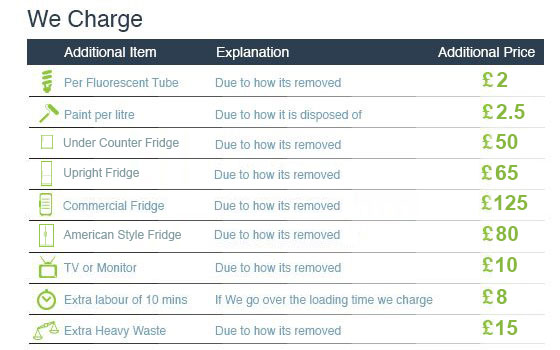
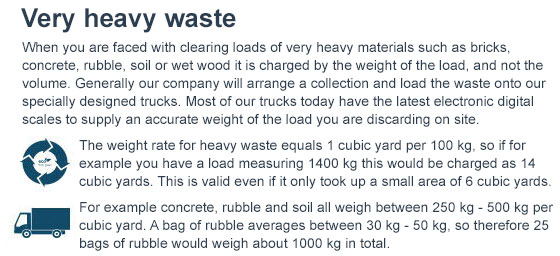
It can also help to look at the website's pricing and quotes information before you book anything. Even if you are not ready to commit, understanding how quotes are usually built gives you a better sense of value. And yes, value matters. Nobody enjoys paying twice because the first job was undersized.
Law, Compliance, Standards and Best Practice
Waste clearance in the UK should always be handled with care, particularly where transport, disposal, and potentially sensitive materials are involved. You do not need to become a compliance expert, but you should know the basics.
Good practice usually includes:
- disposing of waste through lawful, appropriate facilities
- sorting materials responsibly where possible
- keeping clear records or paperwork where needed for business waste
- handling electrical items, sharp materials, and heavy objects safely
- ensuring workers or contractors have suitable insurance and follow safe working methods
For households, the main concern is safe, responsible disposal. For businesses, there can be more documentation, especially if waste arises from regular operations, fit-outs, or office changes. It is worth asking clear questions before work starts. A straightforward provider should be able to explain the process in plain English.
Safety is a big part of this too. If a clearance involves loft access, hazardous edges, unstable furniture, or heavy lifting in tight spaces, it is sensible to review the site's insurance and safety information. Better safe than sorry, as people say for good reason.
For anyone with stronger ethical concerns about labour and supply chains, the modern slavery statement page provides reassurance about the broader standards a responsible business should uphold. It is not flashy reading, granted, but trust is often built in the unglamorous parts.
Options, Methods, or Comparison Table
Choosing the right clearance method depends on the waste type, the size of the job, and how quickly you want it removed. Here is a simple comparison to help you decide.
| Method | Best for | Strengths | Watch-outs |
|---|---|---|---|
| Rubbish collection | Smaller or regular loads | Simple and flexible | May not suit large bulky items |
| Waste removal | Mixed household or light commercial waste | Broad, practical coverage | Check whether special items are included |
| Rubbish clearance | General one-off clear-outs | Useful for a wide range of jobs | Access and volume still matter |
| Furniture disposal | Sofas, beds, wardrobes, tables | Handles bulky pieces safely | May need dismantling or lifting support |
| Skip hire | Projects over several days | Good for ongoing work | Space, permits, and loading rules can complicate things |
| Man-and-van clearance | Fast, single-visit clearances | Very convenient for access-heavy sites | Requires a clear scope in advance |
If you are unsure which route fits your situation, ask yourself one simple question: do I need a storage container for the job, or do I need the items physically removed from where they sit? That answer usually points you in the right direction. Not always, but often enough.
Case Study or Real-World Example
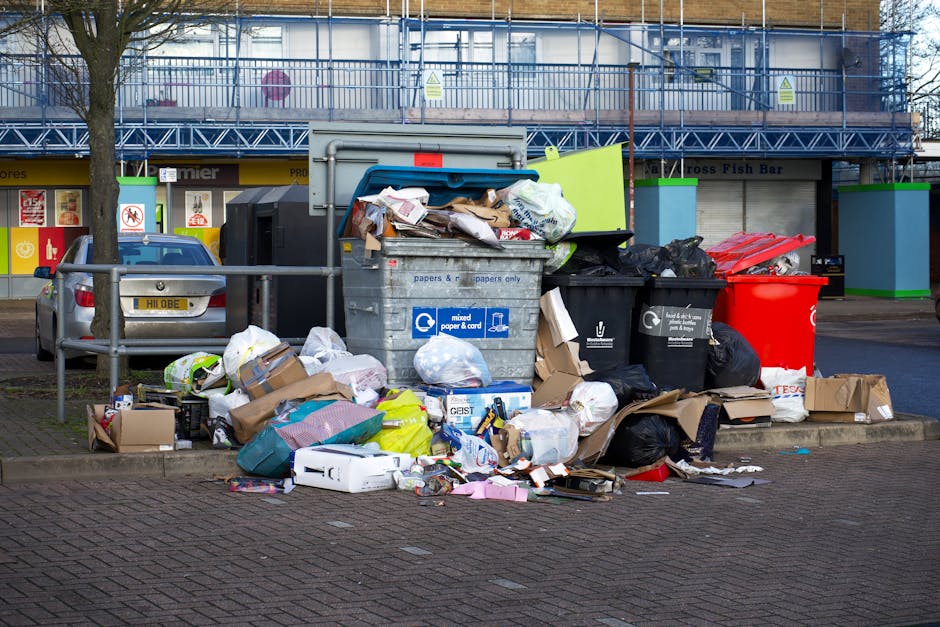
A typical Rushey Green scenario might look like this: a couple is preparing to move out of a first-floor flat near the high street. They have years of accumulated belongings, a broken wardrobe, several bags of old books, kitchen items, and a garden chair that has long since surrendered to the weather.
At first, they think they can manage it with a few trips and a borrowed car. Then they notice the stairs are narrow, the car park is tight, and the clock is ticking because the handover date is close. So they pause and assess the job properly.
What works best in that situation is usually a structured clearance plan: sort keep items first, separate furniture from general rubbish, and use a service designed for mixed loads. If there are extra bulky pieces, the furniture can be handled separately rather than forcing everything into one awkward pile. The flat is cleared in one go, the hallway stays usable, and the move is less chaotic.
That kind of result is common. The point is not drama. It is relief. People often say the place feels bigger the minute the clutter is gone. Sometimes that is half the battle.
Practical Checklist
Use this before you book or begin any clearance work around Rushey Green Catford.
- Identify the exact type of waste.
- Estimate how much needs removing.
- Check stairs, parking, and access routes.
- Put aside valuables and documents first.
- Decide whether items can be reused or recycled.
- Choose the right clearance method for the job size.
- Ask about insurance, safety, and disposal practices.
- Confirm timing, especially if you are working to a deadline.
- Make sure communal areas will be protected during removal.
- Keep a quick list of what is staying and what is going.
Expert summary: the best waste clearance is rarely the cheapest-looking option on paper. It is the one that removes the stress, fits the space, and leaves you with a clean result and no awkward surprises.
Get a free quote today and see how much you can save.
Conclusion
Waste clearance solutions around Rushey Green Catford are most effective when they are matched to the actual job, not just the label on the bin bag. A single sofa, a crowded loft, a garden overhaul, or a full office clear-out each needs a slightly different approach. Once you treat the job that way, the whole process becomes easier to understand and much easier to live with.
The main thing is not to let clutter or waste become a background problem that drains time and energy. Clear it properly, handle it responsibly, and give yourself the space back. There is something quietly satisfying about standing in a room that used to be packed and hearing your own footsteps again. That small reset can mean a lot.


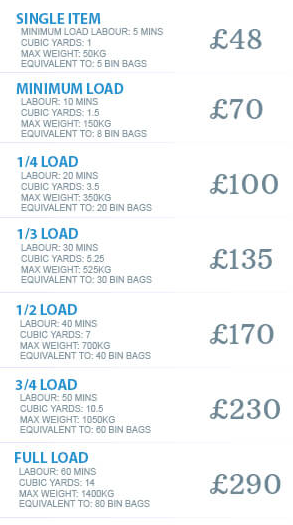
 Tipper Van - Rubbish Removal and Loft Clearance Prices in Catford, SE6
 Luton Van - Rubbish Removal and Loft Clearance Prices in Catford, SE6